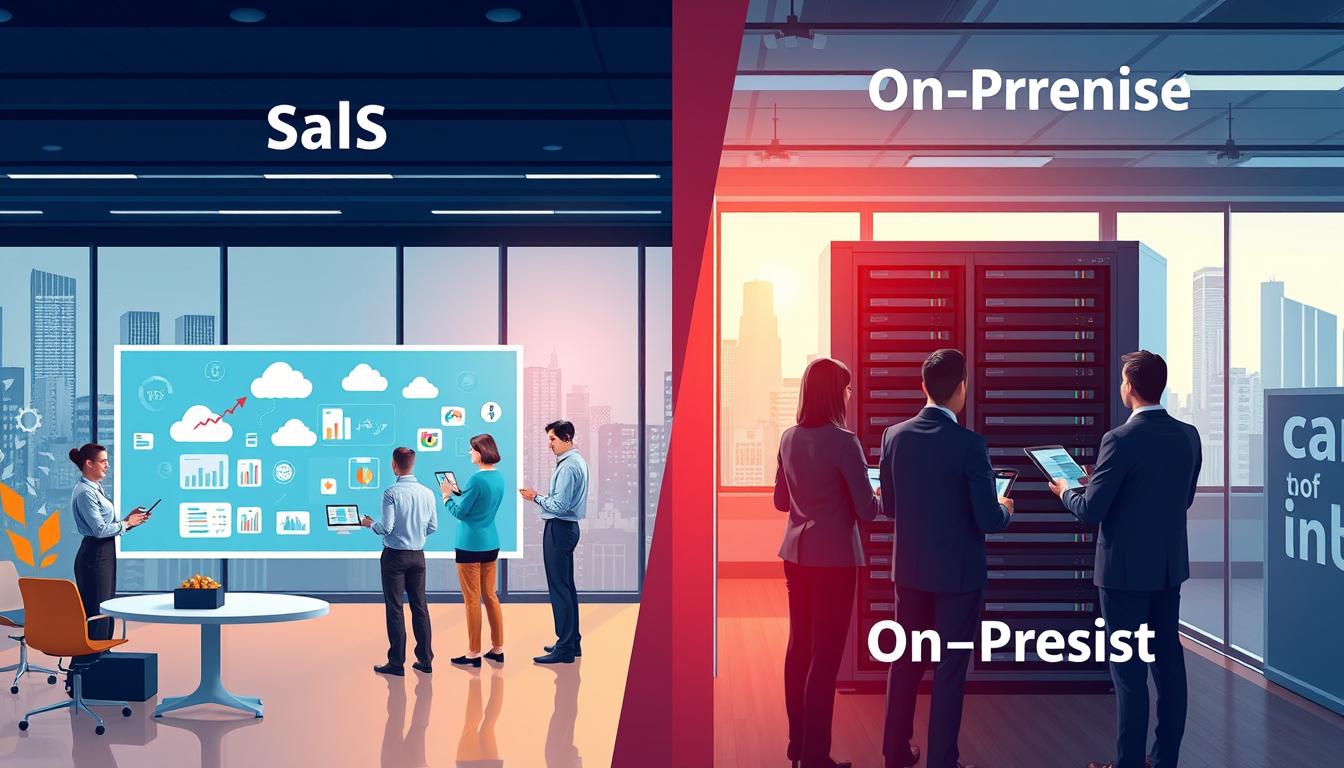
As a technology professional, making the right choice between SaaS and on-premise enterprise software is crucial for your organization’s success.
In this comprehensive guide, I will walk you through the key differences, advantages, and challenges of each deployment model, helping you make an informed decision that aligns with your business needs.
With my experience and insights, you will gain a deeper understanding of these complex technologies and be better equipped to navigate the decision-making process.
Key Takeaways
- Understand the fundamental differences between SaaS and on-premise enterprise software.
- Learn about the advantages and challenges of each deployment model.
- Discover how to make an informed decision that aligns with your business needs.
- Gain insights into the key considerations for enterprise software selection.
- Develop a comprehensive understanding of the implications of each deployment model.
Understanding Enterprise Software Deployment Models
As businesses navigate the complex landscape of enterprise software, understanding the nuances of deployment models is crucial. Enterprise software deployment models refer to the ways in which software applications are delivered, managed, and maintained within an organization.
What is SaaS (Software as a Service)?
SaaS is a cloud-based software delivery model where applications are hosted and managed by a third-party vendor. This model eliminates the need for businesses to install, configure, and maintain software on their own premises. SaaS solutions are typically accessed via the internet, providing users with flexibility and scalability.
What is On-Premise Software?
On-premise software refers to applications that are installed and run on an organization’s own servers and computers. This traditional model gives businesses full control over their software environment but requires significant upfront investment in hardware, software, and IT resources.
The Hybrid Approach
The hybrid approach combines elements of both SaaS and on-premise models, allowing businesses to leverage the benefits of each. For instance, a company might use SaaS for customer-facing applications while maintaining sensitive data on-premise.
| Deployment Model | Key Characteristics | Benefits |
|---|---|---|
| SaaS | Cloud-based, vendor-managed | Scalability, reduced IT burden |
| On-Premise | Installed on organization’s servers | Control, security |
| Hybrid | Combination of SaaS and on-premise | Flexibility, optimized resource allocation |
SaaS vs On-Premise: Key Differences Explained
When deciding between SaaS and on-premise solutions, understanding the key differences is crucial for making an informed decision. The distinctions between these two models impact various aspects of business operations, from control and accessibility to vendor dependency.
Ownership and Control Comparison
One of the primary differences between SaaS and on-premise solutions lies in ownership and control. On-premise software is typically purchased outright, giving the organization full control over the software and its deployment. In contrast, SaaS solutions are subscription-based, with the vendor maintaining ownership and control over the software.
Key considerations for ownership and control include:
- Data ownership and management
- Customization capabilities
- Security and compliance responsibilities
Accessibility and Mobility Features
Accessibility and mobility are critical factors in the SaaS vs on-premise debate. SaaS solutions offer greater flexibility and accessibility, as users can access the software from anywhere with an internet connection. On-premise solutions, while potentially more secure, may require more complex remote access arrangements.
The benefits of SaaS accessibility include:
- Increased mobility for remote work
- Easier collaboration across teams
- Reduced need for internal infrastructure
Vendor Dependency Factors
Vendor dependency is another crucial aspect to consider when evaluating SaaS vs on-premise solutions. SaaS models inherently involve a level of dependency on the vendor for ongoing support, updates, and maintenance. On-premise solutions, while potentially more resource-intensive, allow organizations to manage their dependencies more directly.
Key vendor dependency factors include:
- Contractual agreements and SLAs
- Customization and integration capabilities
- Data migration and exit strategies
The Evolution of Enterprise Software Solutions
Enterprise software solutions have a rich history that has led to the current state of cloud and on-premise deployments. Understanding this evolution is crucial for making informed decisions about your enterprise software.
Historical Context of Business Applications
Traditionally, businesses relied on on-premise software solutions, which required significant upfront investments in hardware and maintenance. This approach provided control over data and applications but was often costly and inflexible.
The Rise of Cloud Computing
The advent of cloud computing revolutionized the enterprise software landscape. Cloud-based solutions, or SaaS (Software as a Service), offered scalability, reduced upfront costs, and increased accessibility. This shift has enabled businesses to be more agile and responsive to changing market conditions.
Current Market Trends and Adoption Rates
Today, the market is witnessing a significant shift towards cloud-based solutions. According to recent trends, more businesses are adopting SaaS solutions for their flexibility and cost-effectiveness. However, some organizations still prefer on-premise solutions due to security and compliance requirements.
The evolution of enterprise software solutions continues, with hybrid models emerging to combine the benefits of both cloud and on-premise deployments. As technology advances, businesses must stay informed to make the best decisions for their enterprise software needs.
Cost Comparison: Cloud vs Self-Hosted Solutions
When evaluating enterprise software, understanding the cost implications of cloud-based versus self-hosted solutions is crucial. This comparison will help businesses make informed decisions that align with their budgetary constraints and financial strategies.
Initial Investment Requirements
The initial investment for SaaS solutions is typically lower, as it eliminates the need for upfront hardware and software purchases. In contrast, on-premise solutions require significant initial investments in infrastructure, software licenses, and implementation costs.
Ongoing Operational Costs
Ongoing costs for SaaS include subscription fees, which are often predictable and scalable. For on-premise solutions, operational costs encompass maintenance, support, and upgrade expenses, which can be more variable and potentially higher.
Total Cost of Ownership Analysis
A total cost of ownership (TCO) analysis reveals that SaaS solutions often have a lower TCO over time due to reduced maintenance and support costs. On-premise solutions, however, may incur higher TCO due to the need for continuous hardware upgrades and software updates.
Hidden Costs to Consider
Hidden costs for SaaS include potential data migration costs and integration expenses. For on-premise solutions, hidden costs may involve unplanned maintenance downtime and the cost of keeping IT staff up-to-date with the latest technologies.
In conclusion, a thorough cost comparison between SaaS and on-premise solutions involves considering not just the initial investment but also ongoing operational costs, total cost of ownership, and potential hidden expenses. By understanding these factors, businesses can make more informed decisions that fit their financial capabilities and strategic objectives.
Implementation and Deployment Timelines
As businesses weigh the pros and cons of SaaS versus on-premise enterprise software, implementation and deployment timelines play a critical role in the decision-making process.
SaaS Implementation Process
SaaS solutions typically offer a streamlined implementation process. With cloud-based infrastructure, the vendor handles maintenance and updates, reducing the time required for deployment. Implementation times can be as short as a few weeks, depending on the complexity of the solution and the organization’s readiness.
On-Premise Deployment Challenges
On-premise solutions, however, present more challenges during deployment. The need for in-house infrastructure, hardware installation, and software configuration can significantly extend the implementation timeline. Deployment can take several months to a year or more, influenced by factors such as IT resources and customization requirements.
Time-to-Value Comparison
The time-to-value is a crucial metric in this comparison. SaaS solutions generally offer a faster time-to-value due to their rapid deployment capabilities. The following table summarizes the key differences:
| Deployment Aspect | SaaS | On-Premise |
|---|---|---|
| Average Deployment Time | Few weeks to 3 months | Several months to 1 year+ |
| Maintenance Responsibility | Vendor | In-house IT |
| Customization Flexibility | Limited | High |
Security Considerations for Enterprise Software
In the realm of enterprise software, security stands as a crucial differentiator between SaaS and on-premise solutions. As organizations increasingly adopt digital transformation strategies, understanding the security implications of each model is vital.
SaaS Security Frameworks and Certifications
SaaS providers typically implement robust security frameworks and obtain various certifications to ensure data protection. For instance, many SaaS solutions adhere to SOC 2 and ISO 27001 standards, demonstrating their commitment to security best practices. As noted by a security expert, “SaaS vendors that prioritize security certifications are more likely to protect customer data effectively.”
“The right SaaS solution can significantly enhance an organization’s security posture by providing advanced threat detection and response capabilities.”
On-Premise Security Control Advantages
On-premise solutions, on the other hand, offer organizations direct control over their security infrastructure. This control allows businesses to implement customized security measures tailored to their specific needs. However, it also means that the organization is responsible for maintaining and updating these security controls.

Data Sovereignty and Compliance Requirements
Data sovereignty is another critical aspect of enterprise software security. Organizations must consider where their data is stored and how it is processed. Compliance requirements, such as GDPR in Europe or HIPAA in the healthcare industry, dictate how data should be handled and protected.
Breach Response Capabilities
In the event of a security breach, both SaaS and on-premise solutions require effective breach response strategies. SaaS vendors often provide built-in breach response capabilities, while on-premise solutions require organizations to develop their own incident response plans.
Ultimately, the choice between SaaS and on-premise enterprise software depends on an organization’s specific security needs and capabilities. By carefully evaluating the security features of each model, businesses can make informed decisions that protect their critical assets.
Scalability and Flexibility Factors
As businesses grow, their software needs evolve, making scalability a critical factor. The ability to scale efficiently can make or break a company’s ability to adapt to changing market conditions.
Scaling with SaaS Solutions
SaaS solutions offer inherent scalability, allowing businesses to quickly adjust to new demands. With cloud-based infrastructure, scaling up or down is as simple as adjusting subscription levels, making it an attractive option for businesses experiencing rapid growth or fluctuating demands.
On-Premise Expansion Challenges
In contrast, on-premise solutions require significant upfront investment in hardware and infrastructure to scale. This can lead to capacity planning challenges and potential resource underutilization if growth doesn’t meet expectations.
Adapting to Business Growth and Changing Needs
Ultimately, the choice between SaaS and on-premise solutions depends on a business’s specific needs and growth trajectory. Companies must weigh the benefits of scalability against other factors like control and customization when deciding between cloud vs self-hosted options.
Customization and Integration Capabilities
In the debate between SaaS and On-Premise solutions, understanding customization and integration capabilities is essential. As businesses evaluate these options, the degree of customization possible and the ease of integration with existing systems can significantly influence their decision.
SaaS Customization Limitations
SaaS solutions offer a range of customization options, but they are generally limited by the vendor’s architecture. Configurable workflows, custom fields, and user interface personalization are common customization features. However, deep modifications to the core software are typically not feasible without vendor support.
On-Premise Modification Freedom
On-Premise solutions, being installed locally, offer greater flexibility for customization. Organizations can modify the software to meet specific needs, including integrating with other in-house systems. This level of customization can be both an advantage and a challenge, requiring significant in-house expertise.
API and Third-Party Integration Options
Both SaaS and On-Premise solutions offer APIs and support for third-party integrations. APIs enable developers to build custom integrations, enhancing the software’s functionality. However, the quality and documentation of these APIs can vary between vendors.
Common Integration Challenges
- Data format inconsistencies
- Security and authentication issues
- Compatibility problems with other systems
Success Strategies for Seamless Integration
To overcome integration challenges, businesses should plan carefully, choosing integration tools that are compatible with their existing infrastructure. It’s also crucial to work closely with vendors and developers to ensure that integrations are well-documented and supported.
Maintenance and Support Requirements
Understanding the maintenance and support requirements of your software is vital for making an informed decision between SaaS and on-premise solutions. Maintenance and support are ongoing needs that can significantly impact the total cost of ownership and the overall user experience.
SaaS Vendor Support Models
SaaS vendors typically offer comprehensive support models that include regular updates, patches, and security fixes. This support is usually included in the subscription fee, providing a predictable cost structure. For instance, a SaaS vendor might offer 24/7 customer support through multiple channels, such as phone, email, and live chat.
“The right support model can make all the difference in the success of your software implementation.” –
In-House IT Support for On-Premise
On-premise solutions, on the other hand, require in-house IT support for maintenance, updates, and troubleshooting. This can involve significant costs, including personnel, infrastructure, and training. The on premise cost can be substantial, especially for complex systems that require specialized expertise.
Update and Patch Management Differences
The management of updates and patches differs significantly between SaaS and on-premise solutions. SaaS solutions are typically updated automatically by the vendor, ensuring that all users have access to the latest features and security patches. In contrast, on-premise solutions require manual updates, which can be time-consuming and may introduce compatibility issues.
| Feature | SaaS | On-Premise |
|---|---|---|
| Update Management | Automatic | Manual |
| Support Model | Vender-provided | In-house IT |
| Security | Enhanced SaaS security features | Customizable security measures |
In conclusion, when evaluating SaaS and on-premise solutions, it’s crucial to consider the maintenance and support requirements. By understanding these factors, you can make a more informed decision that aligns with your organization’s needs and resources.
Industry-Specific Case Studies
Industry-specific case studies reveal the unique challenges and successes of implementing enterprise software. By examining real-world examples, we can gain valuable insights into how different industries have benefited from SaaS and on-premise solutions.
Healthcare and HIPAA Compliance Examples
In healthcare, compliance with regulations such as HIPAA is paramount. SaaS solutions like athenahealth have been successfully implemented to manage patient data securely. On-premise solutions are also used by larger healthcare institutions to maintain control over sensitive information.
Financial Services Implementation Stories
Financial services firms have adopted both SaaS and on-premise solutions to enhance their operations. For instance, PayPal utilizes robust on-premise infrastructure to handle transactions, while smaller firms may opt for SaaS solutions like QuickBooks for accounting.
Manufacturing and Supply Chain Solutions
Manufacturing companies have seen improvements in supply chain management through the adoption of SaaS solutions. SAP provides comprehensive ERP solutions that can be deployed both on-premise and as SaaS, offering flexibility to manufacturing firms.
Retail and E-commerce Success Cases
Retailers have successfully implemented both SaaS and on-premise e-commerce platforms. For example, Shopify offers a popular SaaS e-commerce solution, while larger retailers may use on-premise solutions like Magento for greater customization.
| Industry | SaaS Example | On-Premise Example |
|---|---|---|
| Healthcare | athenahealth | Epic Systems |
| Financial Services | QuickBooks | PayPal’s transaction processing |
| Manufacturing | SAP Cloud | SAP ERP |
| Retail | Shopify | Magento |
Decision Framework for Enterprise Software Selection
Making an informed decision about enterprise software deployment is crucial for long-term success. This involves a comprehensive evaluation of various factors that influence the choice between SaaS and on-premise solutions.
Assessing Your Business Requirements
The first step is to assess your business needs. This includes understanding the specific functionalities required, the number of users, and the scalability needs of your organization.
- Identify core business processes that need to be supported by the software.
- Determine the level of customization required.
- Consider the integration needs with existing systems.
Evaluating Technical Capabilities and Resources
Evaluating your technical capabilities is crucial. This involves assessing your IT infrastructure, the expertise of your team, and the resources available for implementation and maintenance.
Key considerations include:
- Existing hardware and software infrastructure.
- IT staff expertise and training needs.
- Potential vendor support and partnership opportunities.
Financial Analysis Approach
A thorough financial analysis is essential. This includes calculating the total cost of ownership, understanding the pricing models of SaaS vs on-premise solutions, and evaluating the return on investment.
Risk Assessment Strategies
Risk assessment is vital to mitigate potential issues. This involves identifying security risks, compliance requirements, and operational risks associated with each deployment model.
Creating a Weighted Decision Matrix
A weighted decision matrix can help quantify the decision by assigning weights to different criteria based on their importance.
Involving Key Stakeholders in the Process
Involving key stakeholders ensures that all perspectives are considered. This includes IT teams, business leaders, and end-users who will be impacted by the software.
Conclusion: Making the Right Choice for Your Enterprise
Choosing between SaaS and on-premise enterprise software is a complex decision that requires careful consideration of multiple factors. As we’ve explored throughout this guide, both deployment models have their strengths and weaknesses.
When making an enterprise software decision, it’s essential to assess your business requirements, evaluate technical capabilities, and consider financial implications. The saas vs on premise debate ultimately comes down to your organization’s specific needs and priorities.
To make an informed decision, consider the following key factors: scalability, security, customization, and total cost of ownership. By weighing these factors and aligning them with your business goals, you’ll be better equipped to choose the deployment model that best suits your enterprise.
Ultimately, the right choice will depend on your organization’s unique circumstances, and I recommend revisiting the key points discussed in this guide to ensure you’re making the most informed decision possible.