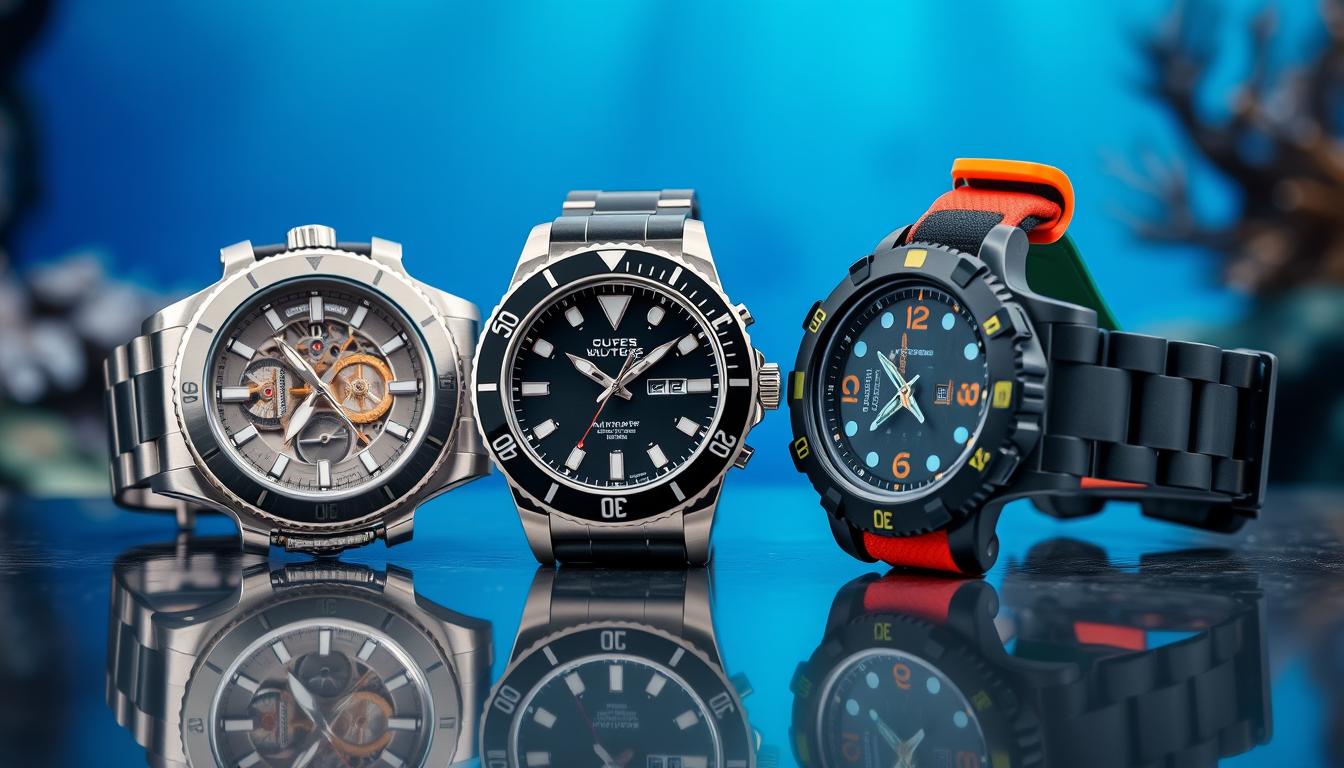
As I explore the world of dive watches, I’m often asked about the best movement for one’s budget. The choice between automatic and quartz movements can be daunting, especially for those new to the world of horology.
In this article, I’ll delve into the pros and cons of automatic dive watch and quartz dive watch movements, helping you make an informed decision when selecting an affordable dive watch.
Key Takeaways
- Understand the fundamental differences between automatic and quartz movements.
- Learn about the advantages and disadvantages of each movement type.
- Discover how to choose the right movement for your budget.
- Explore the technical aspects of dive watches.
- Make an informed decision when purchasing your next dive watch.
The Fundamentals of Dive Watch Movements
Understanding the core of a dive watch requires examining its movement, which is crucial for its overall performance. The movement is what powers the watch, enabling it to keep accurate time even underwater. As I reflect on my experience with dive watches, it’s clear that the movement is a critical component that distinguishes a good watch from a great one.
What Defines a Dive Watch
A dive watch is defined by its ability to withstand the pressures of deep water while maintaining its timekeeping accuracy. Key characteristics include water resistance, legibility, and a unidirectional rotating bezel. These features work together to ensure that the watch remains functional and reliable during dives.
The Critical Role of Movement in Performance
The movement is the heart of the dive watch, determining its reliability and performance. There are two primary types of movements used in dive watches: automatic and quartz. Each has its advantages and disadvantages.
| Movement Type | Key Features | Advantages |
|---|---|---|
| Automatic | Self-winding, mechanical | Reliable, aesthetic appeal |
| Quartz | Battery-powered, crystal oscillation | Accurate, low maintenance |
In conclusion, the movement of a dive watch is fundamental to its performance and reliability. Whether automatic or quartz, the movement is what makes a dive watch tick, quite literally. Understanding the basics of dive watch movements is essential for making an informed decision when choosing a dive watch that meets your needs.
Automatic Movements Explained
The allure of automatic movements in dive watches lies in their self-winding mechanism, a marvel of horological engineering. As I delve into the intricacies of these movements, it becomes clear that their appeal is rooted in both technical sophistication and aesthetic charm.
The Mechanics Behind Self-Winding Watches
Automatic movements harness the wearer’s movements to power the watch, eliminating the need for battery replacement. This is achieved through a rotor that spins with the wearer’s motions, winding the mainspring. The result is a seamless blend of mechanical craftsmanship and practicality.
Seiko NH35: The Budget-Friendly Workhorse
The Seiko NH35 is a widely acclaimed movement in the world of affordable dive watches. Known for its reliability and accuracy, it has become a staple in many budget-friendly timepieces. Its 21600 vibrations per hour (VPH) and approximately 41-hour power reserve make it an excellent choice for everyday wear.
Miyota Movements: Japanese Reliability
Miyota movements, produced by Citizen Watch Co., are renowned for their quality and durability. They offer a range of movements suitable for dive watches, including the popular 8215 and 9015 models.
Miyota 8215 vs 9015 Comparison
Both the Miyota 8215 and 9015 are caliber movements used in automatic watches. The key differences lie in their features and specifications.
| Feature | Miyota 8215 | Miyota 9015 |
|---|---|---|
| Vibrations Per Hour (VPH) | 21600 | 21600 |
| Power Reserve | 40 hours | 42 hours |
| Jewels | 21 | 24 |
Power Reserve Considerations
When choosing an automatic dive watch, the power reserve is an important consideration. A longer power reserve means the watch can be left unworn for longer periods without needing to be rewound. Both the Seiko NH35 and Miyota movements offer respectable power reserves, with the Seiko NH35 providing approximately 41 hours and Miyota movements ranging from 40 to 42 hours.
Quartz Movements Demystified
Quartz movements have revolutionized the watch industry with their accuracy and low maintenance. As I explore the intricacies of quartz movements in dive watches, it’s clear that they offer a compelling alternative to traditional automatic movements.
How Crystal Oscillation Powers Timekeeping
The heart of a quartz movement is a crystal oscillator, typically made from quartz crystal. When an electric current is passed through this crystal, it vibrates at a precise frequency, usually 32,768 times per second. These vibrations are counted by an electronic circuit, which converts them into a signal that drives the watch’s hands. This process ensures accurate timekeeping, a crucial feature for any dive watch.
Battery Life and Replacement
One of the key advantages of quartz movements is their low maintenance. Most quartz dive watches run on a battery that can last anywhere from 2 to 5 years, depending on the specific movement and features like backlighting. When the battery does need replacement, it’s a relatively straightforward process, although some modern quartz watches, like those with solar-powered options, can significantly extend or even eliminate the need for battery replacements.
Advanced Quartz Technologies
Quartz technology has advanced significantly over the years, leading to the development of more sophisticated and reliable movements. Two notable advancements are solar-powered options and High-Accuracy Quartz (HAQ) movements.
Solar-Powered Options
Solar-powered quartz watches use light to recharge their batteries, reducing the need for manual battery replacements. This technology not only enhances convenience but also makes the watches more environmentally friendly.
High-Accuracy Quartz (HAQ)
HAQ movements represent a significant improvement in quartz technology, offering accuracy that rivals some mechanical movements. These movements use advanced crystal oscillation technology to achieve higher precision, making them an attractive option for those seeking a reliable dive watch movement.
In conclusion, quartz movements offer a blend of accuracy, reliability, and low maintenance that makes them an excellent choice for dive watches. Whether you’re drawn to the practicality of solar-powered options or the precision of HAQ movements, there’s a quartz dive watch out there to suit your needs.
Accuracy and Precision Comparison
As a diver, understanding the accuracy and precision differences between automatic and quartz dive watches is vital. The choice between these two movements can significantly impact your diving experience.
Typical Deviation Rates
Automatic dive watches typically have a deviation rate of around 10-15 seconds per day. In contrast, quartz movements are known for their high accuracy, with an average deviation of about 10-15 seconds per year. This significant difference in accuracy can be a deciding factor for divers who require precise timekeeping.
Key deviation rates to consider:
- Automatic: 10-15 seconds/day
- Quartz: 10-15 seconds/year
Temperature Effects on Movement Performance
Temperature fluctuations can affect the performance of both automatic and quartz movements. However, quartz movements tend to be more stable across a range of temperatures. For instance, a quartz movement might maintain its accuracy within a few seconds per year even in extreme temperatures, whereas an automatic movement could deviate more significantly.
Practical Implications for Divers
For divers, the practical implications of these differences are significant. While automatic movements offer a unique appeal and mechanical charm, quartz movements provide the reliability and precision that can be critical during dives. Divers must weigh these factors based on their specific needs and preferences.
The choice ultimately depends on whether you prioritize the mechanical heritage and aesthetic of automatic movements or the precision and reliability of quartz movements.
Durability and Reliability Under Pressure
Dive watches are engineered to operate under extreme pressure, making the resilience of their movements crucial. As someone who’s experienced the thrill of deep-sea diving, I can attest to the importance of a watch that can withstand the underwater world’s harsh conditions.
Shock Resistance Analysis
The shock resistance of a dive watch movement is critical, as it directly impacts the watch’s ability to function after being subjected to sudden impacts or drops. Automatic movements, like the Seiko NH35, are known for their robustness and ability to withstand shocks. In contrast, quartz movements, such as those found in quartz dive watches, typically offer superior resistance to shocks due to their simpler mechanics and fewer moving parts.
Magnetic Resistance Differences
Magnetic resistance is another vital aspect, as modern watches are often exposed to various magnetic fields. Automatic movements can be more susceptible to magnetic interference, potentially affecting their accuracy. However, some modern automatic movements incorporate anti-magnetic technologies to mitigate this issue. Quartz movements, on the other hand, are generally less affected by magnetic fields, providing a more stable timekeeping experience under such conditions.
Depth Rating Considerations
The depth rating of a dive watch is a critical factor, indicating the maximum depth at which the watch can operate safely. Both automatic and quartz dive watches can achieve high depth ratings, but the construction and sealing of the watch case play a significant role. A well-sealed case can protect the movement, whether automatic or quartz, from water ingress, ensuring reliable operation at significant depths.
In conclusion, when evaluating the durability and reliability of dive watch movements under pressure, it’s essential to consider shock resistance, magnetic resistance, and depth rating. Both automatic and quartz movements have their strengths and weaknesses in these areas, influencing the overall performance of the dive watch.
Affordable Dive Watches for Every Budget
Budget constraints shouldn’t limit your ability to own a quality dive watch. Whether you’re a seasoned diver or just starting your horology journey, there are numerous affordable options available that don’t compromise on style or functionality.
Entry-Level Options ($100-250)
For those new to dive watches or looking for a budget-friendly option, the $100-250 range offers some excellent choices. Here, you’ll find both quartz and automatic movements, catering to different preferences.
Quartz Contenders
Quartz dive watches are known for their accuracy and low maintenance. Some top picks in this range include:
- Seiko Prospex: Known for its reliability and robust build.
- Citizen BM8180-03E: Offers excellent value with its Eco-Drive technology.
Automatic Alternatives
For those who prefer the craftsmanship of automatic movements, consider:
- Seiko 5 Automatic: A great entry-point into the world of automatic watches.
- Miyota-powered divers: Brands like Orient offer affordable, reliable automatics.
Mid-Range Selections ($250-500)
Stepping into the mid-range, you’ll find watches that offer even more premium features and finishes. This is where you can find some of the best value for money.
Best Value Automatic Divers
Automatic dive watches in this range often come with enhanced features like:
- Improved water resistance: Many can handle depths of 200 meters or more.
- Enhanced craftsmanship: Better finishing and more intricate details.
Some standout models include the Seiko Prospex Automatic and Orient Mako II, both offering great value.
Premium Quartz Offerings
Quartz watches in this range benefit from advanced technologies, such as:
- Spring Drive: A unique technology by Seiko that combines the best of quartz and mechanical watches.
- Radio-controlled movements: Ensuring your watch is always accurate.
These options are perfect for those who value precision and reliability.
Maintenance Costs and Longevity
The true cost of owning a dive watch extends beyond its purchase price to include maintenance and servicing. As someone who’s maintained their own watches, I can attest that understanding these costs is crucial for any serious enthusiast.
Service Intervals Compared
Automatic and quartz movements have different service interval requirements. Automatic movements, like the Seiko NH35 and Miyota movements, typically require servicing every 3-5 years. This involves cleaning, lubricating, and adjusting the movement to maintain its accuracy and prevent wear. Quartz movements, on the other hand, generally require battery replacements every 2-5 years, depending on the specific movement and battery type.
To illustrate the service intervals and associated costs, let’s examine the following table:
| Movement Type | Service Interval | Typical Cost |
|---|---|---|
| Automatic (Seiko NH35) | 3-5 years | $100-$300 |
| Quartz | 2-5 years (battery replacement) | $20-$100 |
DIY Maintenance Possibilities
For those comfortable with basic watch maintenance, DIY tasks can help reduce costs. Simple actions like keeping the watch clean, avoiding extreme temperatures, and monitoring battery life can extend the time between professional services. However, more complex tasks like overhauling an automatic movement require specialized tools and expertise.
Lifetime Cost Analysis
When calculating the lifetime cost of a dive watch, it’s essential to consider both the initial purchase price and ongoing maintenance costs. While quartz movements may seem more cost-effective in the short term due to lower initial costs and simpler maintenance, automatic movements can offer better long-term value for frequent divers who require regular servicing.
By understanding the maintenance requirements and associated costs of different dive watch movements, enthusiasts can make informed decisions about their timepiece investments.
Heritage and Aesthetics: The Intangibles
The world of dive watches is rich with history and aesthetics, making the choice between automatic and quartz a nuanced one. Beyond their functional roles, these timepieces embody a certain charm that is deeply rooted in their movement type.
The Appeal of Mechanical Craftsmanship
Automatic dive watches are often celebrated for their mechanical craftsmanship. The intricate assembly of gears, springs, and balances is a testament to horological artistry. For many enthusiasts, the appeal lies in the visible craftsmanship and the tradition behind mechanical movements.
For instance, the Seiko NH35 movement is renowned for its reliability and affordability, making it a favorite among watchmakers. The Miyota movements, on the other hand, are praised for their Japanese reliability and precision.
Smooth Sweep vs. Tick: Visual Differences
One of the most noticeable differences between automatic and quartz dive watches is the visual effect of their movements. Automatic watches typically have a smooth sweep second hand, which is often associated with high-end timepieces. In contrast, quartz watches have a characteristic “tick” due to their battery-powered crystal oscillation.

Resale Value Considerations
When considering resale value, automatic dive watches often retain their worth better than quartz models. This is partly due to the perceived value of mechanical craftsmanship and the prestige associated with owning a self-winding watch. However, certain quartz dive watches, particularly those from reputable brands, can also hold their value well.
- Automatic dive watches often have better resale value due to their mechanical craftsmanship.
- Quartz dive watches can be more affordable upfront but may depreciate faster.
- Brand reputation plays a significant role in resale value for both types.
In conclusion, the choice between an automatic and quartz dive watch involves considering not just functionality but also the intangible aspects of heritage and aesthetics. Whether you prefer the mechanical charm of an automatic or the precision of a quartz, your dive watch is a reflection of your personal style and appreciation for horology.
Conclusion: Finding Your Perfect Dive Watch Movement
Choosing the right dive watch movement depends on your budget, preferences, and needs. As we’ve explored, both automatic and quartz movements have their strengths and weaknesses. When considering an affordable dive watch, the dive watch movement is crucial.
For those who value tradition and craftsmanship, an automatic dive watch with a reliable Seiko NH35 or Miyota movement might be the best choice. On the other hand, if accuracy and low maintenance are priorities, a quartz dive watch could be the way to go.
Ultimately, the decision comes down to your personal style and what you’re willing to compromise on. By weighing the pros and cons of each movement type, you can find the perfect watch that suits your needs and budget.
Whether you opt for the smooth sweep of an automatic or the precision of quartz, there’s a dive watch out there for you. With the insights gained from this article, you’re now better equipped to make an informed decision and find your ideal dive watch.