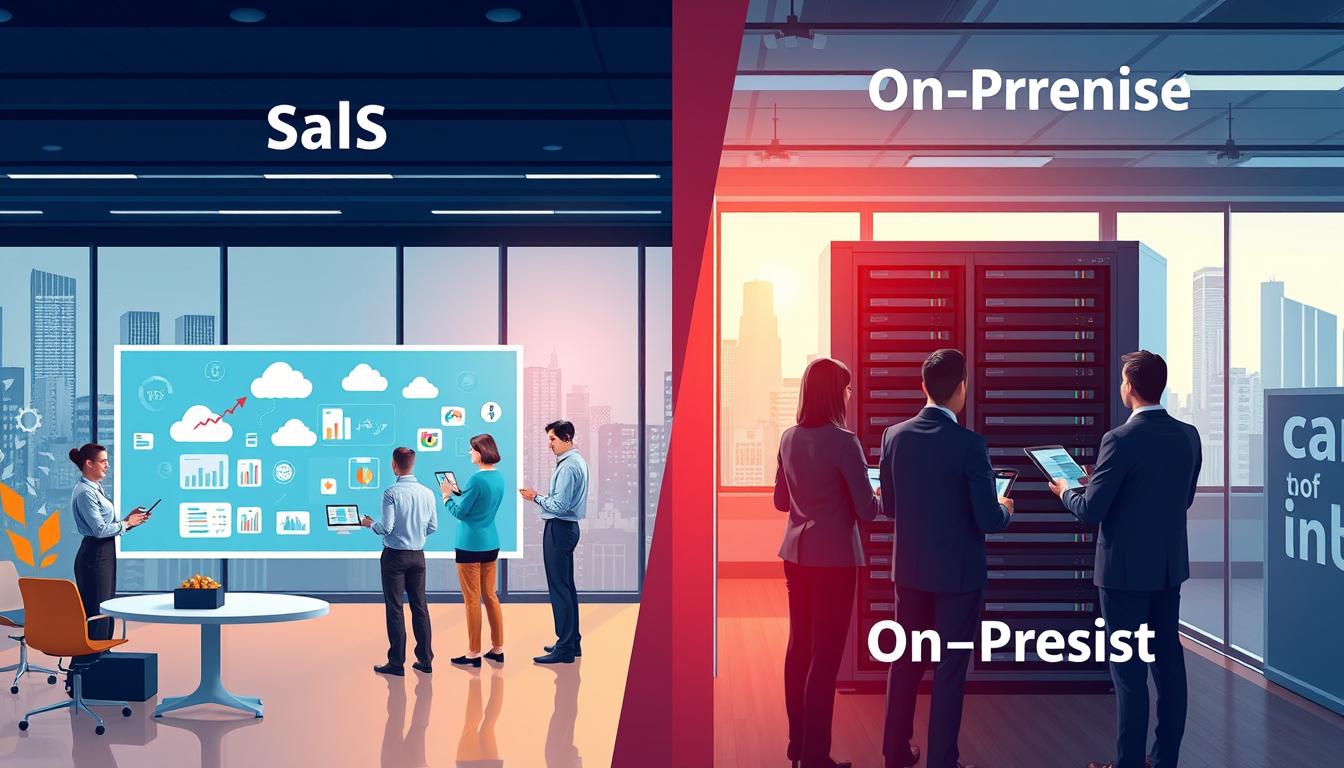
As a seasoned entrepreneur, I’ve navigated the challenging journey of building a successful SaaS business from the ground up. Bootstrapping a SaaS requires a unique blend of resourcefulness, resilience, and strategic decision-making. In this article, I’ll share the strategies that worked for me, providing a roadmap for fellow founders.
Building a SaaS business today demands a deep understanding of the current market landscape and the advantages of self-funding your venture. By leveraging my experience, I’ll explore the realities of creating a thriving SaaS business, focusing on practical solutions for complex challenges.
Key Takeaways
- Understand the current SaaS market landscape
- Learn strategies for self-funding a SaaS
- Discover key decisions for bootstrapping success
- Explore practical solutions for complex SaaS challenges
- Gain insights from a seasoned entrepreneur’s experience
The Reality of Building a SaaS Business Today
The current SaaS landscape is characterized by intense competition and rapid innovation. As a bootstrapped founder, navigating this environment requires a deep understanding of the market dynamics and a strategic approach to growth.
Current SaaS Market Landscape
The SaaS market is more competitive than ever, with numerous players vying for dominance. However, this competition drives innovation, creating opportunities for bootstrapped founders to carve out their niche. According to a recent report, the global SaaS market is projected to reach $436.9 billion by 2027, growing at a CAGR of 18.4%.
Why $1M ARR is a Critical Milestone
Reaching $1M ARR is a significant milestone for any SaaS business, demonstrating a proven business model and scalability. It’s a testament to the founder’s ability to navigate the market and adapt to customer needs. As profitable SaaS businesses, those that reach this milestone are better positioned for long-term success.
“The key to success in SaaS is not just about reaching $1M ARR, but maintaining a focus on profitability and customer satisfaction.”
The Bootstrap Advantage in Today’s Economy
Bootstrapping allows founders to maintain control and focus on profitability, rather than being beholden to investors. In today’s economy, this approach is particularly advantageous, as it enables businesses to be more agile and responsive to market changes. By building a SaaS without funding, founders can prioritize customer needs and drive growth through organic means.
| Key Metrics | Bootstrapped SaaS | VC-Funded SaaS |
|---|---|---|
| Focus | Profitability | Growth at all costs |
| Control | Founder-led | Investor influence |
| Agility | High | Variable |
By understanding the current SaaS market landscape and leveraging the bootstrap advantage, founders can build successful, profitable businesses that thrive in today’s competitive environment.
Bootstrap Versus Venture Capital: Choosing Your Path
As a SaaS founder, one of the most pivotal decisions you’ll make is whether to bootstrap or seek venture capital. This choice can significantly impact your business’s trajectory, influencing everything from growth rate to control over your company’s direction.
Pros and Cons of Bootstrapping
Bootstrapping allows you to maintain control and equity, making decisions without external pressures. However, it can limit your growth due to limited resources. On the other hand, venture capital can accelerate expansion but comes with the cost of equity and potential loss of control.
For instance, bootstrapping enables you to be more agile and adaptable, responding quickly to market changes without needing to consult investors. Yet, it can be challenging to scale quickly or invest in extensive marketing campaigns.
When VC Funding Makes Sense
VC funding is particularly beneficial when you’re in a highly competitive market and need to scale rapidly to capture market share. It’s also advantageous if you require significant upfront investment in technology or talent.
Case Studies: Bootstrapped Success Stories
Many successful SaaS companies have bootstrapped their way to success. For example, Basecamp (formerly 37signals) is a well-known example of a bootstrapped success story. By focusing on profitability from the start and maintaining control, they’ve achieved significant growth without external funding.
These case studies demonstrate that with the right strategy and market conditions, bootstrapping can be a viable path to $1M ARR and beyond.
The Bootstrap Founder Mindset
As a seasoned entrepreneur, I’ve learned that bootstrapping a SaaS business requires a distinct mindset that thrives under resource constraints. This mindset is not just about being frugal; it’s about being innovative, resilient, and focused on profitability from the outset.
Embracing Resource Constraints
Resource constraints can be a catalyst for creativity. By necessity, bootstrapped founders become adept at finding cost-effective solutions, prioritizing features, and streamlining operations. This lean approach can lead to a more efficient and agile business model.
Developing Resilience and Persistence
The path to $1M ARR is rarely smooth. Bootstrapped founders must develop the resilience to weather setbacks and the persistence to keep pushing forward. This involves learning from failures and adapting strategies accordingly.
Building for Profitability from Day One
A key characteristic of successful bootstrapped SaaS businesses is a focus on profitability from the start. This means making decisions that prioritize revenue growth and cost management. By doing so, founders can create a sustainable business model that’s less dependent on external funding.
By embracing these principles, bootstrapped founders can cultivate a mindset that’s geared towards success in the competitive SaaS landscape.
Finding Your Profitable SaaS Niche
Identifying a profitable SaaS niche is crucial for bootstrapped founders looking to achieve $1M ARR. This process involves understanding your target market, identifying pain points, and validating your SaaS idea without significant investment.
Market Research Strategies for Self-Funded Founders
Effective market research is the backbone of finding a profitable niche. As a bootstrapped founder, you can’t afford to waste resources on unproven ideas. Start by analyzing your own experiences and those of your network. Identify common problems or inefficiencies that could be solved with a SaaS solution. Online surveys and social media listening can also provide valuable insights into customer pain points.
Another strategy is to leverage existing data sources. Use tools like Google Trends, Keyword Planner, and industry reports to understand market demand and trends. This data-driven approach helps you identify niches with potential for growth and profitability.
Identifying Pain Points Worth Solving
Not all pain points are worth solving. Focus on those that are significant enough to motivate customers to pay for a solution. Look for areas where current solutions are inadequate, too expensive, or too complicated. Customer interviews and feedback forms on your website or social media can help you understand the depth of these pain points.
Validating Your Idea Without Significant Investment
Validation is key to ensuring your SaaS idea is viable. Start with a simple landing page describing your proposed solution and its benefits. Measure the response through metrics like click-through rates and sign-ups for a waiting list. You can also use minimum viable product (MVP) prototypes or pre-sales to gauge interest and gather feedback.
By following these strategies, bootstrapped SaaS founders can effectively identify and validate profitable niches without breaking the bank. This approach not only saves resources but also significantly increases the chances of success in a competitive SaaS market.
Building Your MVP on a Shoestring Budget
For self-funded SaaS founders, crafting an MVP on a shoestring budget is both a necessity and an opportunity. It forces us to prioritize, innovate, and validate our product idea with minimal investment. As I reflect on my journey, I realize that bootstrapping our SaaS to create a lean MVP was crucial in testing our assumptions without draining our resources.

Essential Features vs. Nice-to-Haves
Distinguishing between essential features and nice-to-haves is critical when developing an MVP on a limited budget. As an indie SaaS founder, I had to focus on the core functionalities that solved the primary pain points for our target audience. This involved rigorous prioritization and a willingness to delay or discard non-essential features.
To achieve this, we used the MoSCoW method, categorizing features into ‘Must-haves,’ ‘Should-haves,’ ‘Could-haves,’ and ‘Won’t-haves.’ This framework helped us stay focused on delivering a product that met our users’ basic needs while keeping development costs in check.
Cost-Effective Development Approaches
Exploring cost-effective development approaches was vital in building our MVP without overspending. We leveraged open-source software and collaborated with freelance developers who were passionate about our product vision. This not only reduced our development costs but also brought diverse perspectives to the table.
Another strategy we employed was using no-code or low-code development platforms for certain components of our MVP. These tools allowed us to prototype and iterate quickly, saving both time and money.
Tools and Resources for Budget-Conscious Founders
There are numerous tools and resources available to help indie SaaS founders develop their MVP on a budget. From project management tools like Trello or Asana to development frameworks like React or Vue.js, the ecosystem is rich with options. Additionally, platforms like GitHub offer a wealth of open-source code that can be adapted for various needs.
As a self-funded SaaS founder, it’s essential to be resourceful and take advantage of these tools to minimize costs and maximize efficiency. By doing so, we can create a compelling MVP that attracts early adopters and sets the stage for future growth.
Pricing Strategies for Maximum Revenue Growth
Effective pricing is a delicate balance between capturing the value delivered to customers and ensuring the long-term sustainability of the business. As a bootstrapped SaaS founder, getting this balance right is crucial for maximizing revenue growth without external funding.
Value-Based Pricing Models
Value-based pricing involves setting prices based on the perceived value of your product or service to the customer. This approach allows SaaS businesses to capture a fair share of the value they create. To implement value-based pricing, you need a deep understanding of your customers’ needs and the unique benefits your solution offers.
Optimizing Your Pricing Tiers
Offering multiple pricing tiers can help cater to different customer segments and increase average revenue per user. When optimizing pricing tiers, consider the features and support levels that differentiate each tier and ensure they align with customer expectations.
When and How to Raise Prices
Raising prices can be challenging, but it’s sometimes necessary to reflect the growing value of your service or to keep up with increasing costs. It’s essential to communicate price changes transparently to your customers and consider offering additional value to justify the increase.
| Pricing Strategy | Key Benefits | Challenges |
|---|---|---|
| Value-Based Pricing | Captures fair share of value created, aligns with customer perception | Requires deep customer understanding, can be complex to implement |
| Tiered Pricing | Increases average revenue per user, caters to different customer segments | Can be confusing for customers if not clearly differentiated |
| Price Increases | Reflects growing value, keeps up with costs | Can lead to customer churn if not communicated effectively |
Customer Acquisition Without Venture Dollars
As an indie SaaS founder, I’ve learned that acquiring customers without venture dollars requires innovative strategies. Bootstrapping a SaaS business to $1M ARR is challenging, but with the right approach, it’s achievable. The key is to focus on cost-effective customer acquisition methods that drive sustainable growth.
Content Marketing That Converts
Content marketing is a powerful tool for bootstrap SaaS companies. By creating high-quality, relevant content, you can attract potential customers and drive conversions. This involves understanding your target audience’s pain points and crafting content that addresses their needs.
Effective content marketing strategies include blog posts, whitepapers, and case studies. These formats allow you to showcase your expertise and build trust with potential customers. For instance, creating a comprehensive guide on solving a specific problem in your niche can position your SaaS as a go-to solution.
SEO for SaaS: Long-Term Traffic Strategy
Search Engine Optimization (SEO) is crucial for indie SaaS founders looking to drive long-term traffic to their websites. By optimizing your content for relevant keywords, you can improve your search engine rankings and attract organic traffic.
A successful SEO strategy involves both on-page and off-page optimization. On-page optimization includes keyword research, meta tags, and content quality. Off-page optimization focuses on building high-quality backlinks from authoritative sites. This not only improves your SEO but also enhances your brand’s credibility.
Community-Building and Word-of-Mouth Growth
Building a community around your SaaS product can drive word-of-mouth growth. By engaging with your users and providing exceptional value, you can turn customers into advocates. This involves creating forums, hosting webinars, or simply engaging with users on social media.
For indie SaaS founders, community-building is about fostering relationships and trust. By doing so, you can create a loyal customer base that will help promote your product through word-of-mouth. This organic growth strategy is not only cost-effective but also highly impactful.
In conclusion, acquiring customers without venture dollars requires a multi-faceted approach that includes content marketing, SEO, and community-building. By leveraging these strategies, bootstrap SaaS companies can achieve sustainable growth and reach $1M ARR.
Metrics That Matter for Bootstrapped SaaS
As a bootstrapped SaaS founder, understanding key metrics is crucial for making informed decisions that drive growth and profitability. The path to $1M ARR is fraught with challenges, and closely monitoring specific performance indicators can make all the difference.
Customer Acquisition Cost (CAC) and Lifetime Value (LTV)
Two of the most critical metrics for any SaaS business are Customer Acquisition Cost (CAC) and Lifetime Value (LTV). CAC measures the total cost of acquiring a new customer, including marketing and sales expenses. LTV, on the other hand, represents the total revenue a business can expect from a single customer over their lifetime. A healthy LTV to CAC ratio is typically considered to be around 3:1, indicating that the lifetime value of a customer is three times the cost of acquiring them.
Monthly Recurring Revenue (MRR) Growth Rate
The Monthly Recurring Revenue (MRR) growth rate is another vital metric for bootstrapped SaaS companies. It measures the percentage change in MRR from one month to the next. A consistent MRR growth rate indicates a stable and expanding customer base. For instance, a 10% monthly MRR growth rate is generally considered healthy for a SaaS business.
Churn and Retention Metrics
Churn rate, which measures the percentage of customers who stop using the service over a given period, is a crucial metric for SaaS businesses. A high churn rate can significantly hinder growth and profitability. Retention metrics, on the other hand, track the percentage of customers retained over time. Improving customer retention through excellent service and support can significantly enhance profitability.
Cash Runway and Burn Rate Management
Managing cash runway and burn rate is essential for bootstrapped SaaS founders. Cash runway refers to the amount of time a company can operate before it runs out of cash, while burn rate measures how quickly a company is spending its cash reserves. Effective management of these metrics ensures that the business remains solvent and can continue to invest in growth initiatives.
| Metric | Description | Target Value |
|---|---|---|
| CAC | Customer Acquisition Cost | Minimize |
| LTV | Lifetime Value | Maximize |
| MRR Growth Rate | Monthly Recurring Revenue Growth | >10% |
| Churn Rate | Percentage of Customers Lost |
Scaling Operations Without Breaking the Bank
Scaling a SaaS business without breaking the bank requires strategic planning and efficient operations. As a bootstrapped founder, I’ve learned that the key to successful scaling lies in maximizing resources while minimizing unnecessary expenses.
Automation and Process Optimization
One of the most effective ways to scale operations is through automation and process optimization. By automating repetitive tasks, you can free up valuable time for your team to focus on high-impact activities. For instance, implementing a robust customer onboarding process can significantly reduce churn rates and improve customer satisfaction.
To achieve this, consider leveraging tools like:
- Zapier for workflow automation
- Trello or Asana for project management
- Intercom or Zendesk for customer support
Strategic Hiring for Maximum Impact
As your SaaS business grows, strategic hiring becomes crucial. It’s essential to prioritize roles that drive maximum impact on your business. Focus on hiring individuals who bring a unique skill set that aligns with your company’s goals.
| Role | Impact | Priority |
|---|---|---|
| Product Developer | High | 1 |
| Marketing Specialist | Medium | 2 |
| Customer Support | High | 1 |
Outsourcing vs. In-House: Making Smart Decisions
When scaling operations, deciding whether to outsource or keep functions in-house is a critical decision. Outsourcing can be a cost-effective way to access specialized skills without the long-term commitment of hiring full-time employees.
Consider outsourcing for:
- Non-core activities like accounting or HR
- Specialized tasks that require specific expertise
- Projects with variable workloads
By making informed decisions about automation, hiring, and outsourcing, bootstrapped SaaS founders can scale their operations efficiently and effectively, ultimately reaching the $1M ARR milestone.
Conclusion: Your Roadmap to $1M ARR
Reaching $1M ARR is a significant milestone for any SaaS business, and as an indie SaaS founder, achieving this goal requires a combination of strategic planning, resilience, and a deep understanding of your market.
Throughout this article, we’ve explored key strategies for bootstrapping a successful SaaS business, from finding a profitable niche and building a cost-effective MVP to optimizing pricing and customer acquisition.
As a self-funded SaaS entrepreneur, focusing on profitability from the outset and leveraging cost-effective development approaches can help you bootstrap your way to success.
By applying these principles and staying committed to your vision, you can build a thriving bootstrap SaaS business that achieves $1M ARR and beyond.
The journey requires persistence, adaptability, and a willingness to learn, but with the right mindset and strategies, you can drive your business forward and achieve long-term success.