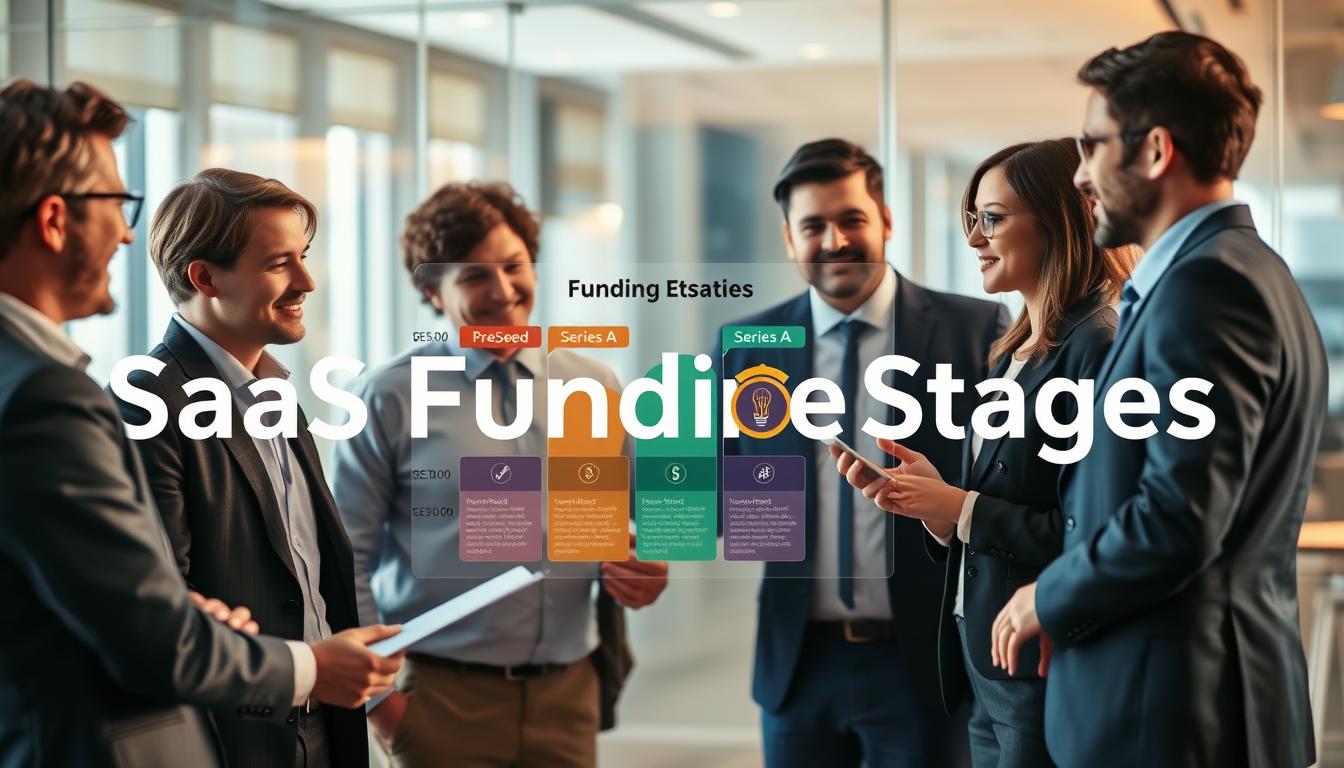
Navigating the complex landscape of SaaS funding can be daunting, even for seasoned professionals. As someone who’s witnessed the challenges and opportunities firsthand, I’m here to break down the various stages of SaaS funding – from pre-seed to Series A.
Understanding these stages is crucial for tech startups looking to secure the right amount of capital at the right time. In this article, I’ll share insights on how to successfully navigate the funding process, providing a clear roadmap for your business.
Key Takeaways
- Understanding the different stages of SaaS funding.
- Identifying the right funding stage for your startup.
- Preparing your business for successful capital acquisition.
- Navigating the challenges associated with each funding stage.
- Maximizing opportunities at each stage of SaaS funding.
The SaaS Funding Landscape in 2023
The current SaaS funding landscape is marked by a delicate balance between investor appetite and the evolving needs of SaaS companies. As we navigate this complex environment, understanding the factors that influence funding is crucial for success.
Current Market Conditions for Tech Startups
In 2023, tech startups face a challenging funding environment, with investors becoming increasingly cautious. Despite this, SaaS companies remain attractive due to their potential for scalability and recurring revenue.
Why SaaS Companies Attract Investors
SaaS companies attract investors due to their potential for rapid growth and scalability. Key factors include a strong value proposition, a clear path to profitability, and a demonstrated ability to execute.
| Investment Criteria | Importance | Key Indicators |
|---|---|---|
| Growth Potential | High | Revenue Growth Rate, Customer Acquisition Cost |
| Scalability | High | Gross Margin, Customer Retention Rate |
| Market Opportunity | Medium | Total Addressable Market, Competitive Landscape |
The Evolution of SaaS Investment Criteria
Over time, SaaS investment criteria have evolved to focus on metrics that demonstrate sustainable growth and profitability. Investors now prioritize factors like customer acquisition costs, lifetime value, and capital efficiency.
By understanding these dynamics, SaaS companies can better position themselves for success in the competitive funding landscape of 2023.
Understanding the SaaS Funding Journey
Navigating the SaaS funding journey requires a deep understanding of the various stages involved. As a seasoned expert, I’ve guided numerous startups through this complex process.
The Typical Funding Timeline
The SaaS funding timeline typically progresses from pre-seed to seed round, and eventually to Series A. Each stage has its unique characteristics and investor expectations.
Pre-seed funding is often about validating your idea, while the seed round focuses on building your product and initial market traction. Series A funding, on the other hand, is about scaling your business.
Key Metrics Investors Look For at Each Stage
Investors at each stage look for different key metrics. During the seed round SaaS phase, investors typically look for a viable product-market fit and initial customer acquisition.
- User acquisition costs
- Customer lifetime value
- Revenue growth
As you progress to Series A, investors expect to see more established metrics, including a clear path to profitability and a scalable business model that meets Series A requirements.
Capital Efficiency vs. Growth at All Costs
One of the critical debates in SaaS funding is between capital efficiency and growth at all costs. While growth is essential, it’s equally important to ensure that you’re not overspending and maintaining a lean operation.
Striking the right balance is key to a successful SaaS funding journey. By understanding the typical funding timeline and key metrics investors look for, you can better prepare your startup for the challenges ahead.
Preparing Your SaaS Startup for Fundraising
As you embark on the journey of raising capital for your SaaS venture, it’s essential to prepare your startup for the challenges ahead. A well-prepared startup is more likely to attract investors and secure the funding needed to drive growth.
Building a Minimum Viable Product
Developing a minimum viable product (MVP) is a critical step in preparing your SaaS startup for fundraising. Your MVP should demonstrate the core value proposition of your product, showcasing its potential to solve real-world problems for your target audience. By focusing on the most essential features, you can validate your product with early adopters and gather valuable feedback to inform future development.
Assembling the Right Team
Investors look for SaaS startups with a strong, capable team in place. When assembling your team, focus on finding individuals with the right mix of skills, experience, and passion for your product. A well-rounded team should include experts in product development, marketing, sales, and finance. By building a cohesive unit, you’ll be better equipped to execute your business plan and drive growth.
Creating Financial Projections and Models
Accurate financial projections are crucial for SaaS startups seeking funding. Your financial models should include detailed revenue forecasts, outlining expected income streams and growth trajectories. Additionally, you’ll need to calculate your burn rate, which represents the rate at which your startup spends its capital.
Revenue Forecasts
When creating revenue forecasts, consider factors such as customer acquisition costs, pricing strategies, and market trends. By developing a comprehensive understanding of your revenue streams, you’ll be better positioned to make informed decisions about resource allocation and growth initiatives.
Burn Rate Calculations
Understanding your burn rate is essential for managing cash flow and ensuring the long-term sustainability of your SaaS startup. By regularly reviewing your burn rate, you can identify areas for cost optimization and make adjustments to extend your runway.
By focusing on these key areas – building a minimum viable product, assembling the right team, and creating financial projections and models – you’ll be well-prepared to navigate the challenges of SaaS fundraising and set your startup up for success.
Bootstrapping: Before External Funding
In my experience, bootstrapping has been a crucial step for many SaaS companies, providing the necessary foundation before seeking external funding. This approach allows startups to maintain control over their product and direction while validating their business model.
Advantages of Self-Funding
Bootstrapping offers several key benefits, including the ability to retain equity and make decisions without external influence. By self-funding, SaaS startups can also develop a more sustainable business model, focusing on organic growth rather than rapid expansion at any cost.
Key advantages of bootstrapping include:
- Maintaining control and equity
- Fostering a sustainable business model
- Encouraging organic growth
When to Consider External Capital
While bootstrapping is beneficial, there comes a point when external capital becomes necessary to scale. This typically occurs when a SaaS startup has validated its product-market fit and is ready to expand its customer base significantly.
| Indicator | Bootstrapping | External Funding |
|---|---|---|
| Control | High | Shared |
| Growth Rate | Organic | Rapid |
| Equity | Retained | Diluted |
Balancing Growth and Runway
One of the critical challenges of bootstrapping is balancing growth with the available financial runway. SaaS startups must carefully manage their cash flow to ensure they have enough resources to achieve key milestones before seeking additional funding.
By understanding the trade-offs between bootstrapping and external funding, SaaS startups can make informed decisions about their funding strategy, ultimately leading to a more successful pre-seed SaaS valuation.
Pre-Seed Funding: Getting Off the Ground
Securing pre-seed funding is a crucial early-stage goal for SaaS companies looking to validate their product and business model. This initial funding stage is pivotal in helping startups transition from an idea to a viable business.
What is Pre-Seed Funding?
Pre-seed funding is the capital raised by a startup before its official seed round. It’s typically used for initial product development, market research, and building the founding team. This stage is about proving the concept and laying the groundwork for future investment.
Typical Pre-Seed Investment Amounts
Pre-seed investment amounts can vary widely, but they generally range from $50,000 to $500,000. The exact amount depends on the startup’s needs, the industry, and the investors’ appetite for risk.
Sources of Pre-Seed Capital
Pre-seed funding can come from various sources, each with its advantages and considerations.
Friends and Family
One of the most common sources of pre-seed funding is friends and family. This network can provide capital based on personal relationships, often with more flexible terms than traditional investors.
Angel Investors
Angel investors are high-net-worth individuals who invest in startups in exchange for equity. They bring not only capital but also valuable experience and connections.
Accelerators
Accelerators offer a structured program that includes funding, mentorship, and networking opportunities. They are particularly beneficial for early-stage startups looking to accelerate their growth.
Understanding these sources and the nature of pre-seed funding can help SaaS startups navigate this critical phase. By securing the right funding, SaaS companies can set themselves up for success in later stages, including the seed round and beyond.
Seed Round: Building Your Foundation
The seed round is a pivotal moment for SaaS companies, setting the stage for future growth. At this stage, startups are looking to scale their product and expand their customer base. To successfully navigate this phase, it’s essential to understand the requirements and expectations of seed investors.
Seed Round Requirements and Expectations
Seed investors typically look for SaaS startups with a proven product-market fit, a clear path to revenue growth, and a competitive edge in their market. To meet these expectations, SaaS companies should focus on:
- Demonstrating traction through user acquisition and revenue growth
- Showcasing a unique value proposition that differentiates them from competitors
- Outlining a clear plan for how they intend to use the seed funding
Typical Valuation Ranges for SaaS Seed Rounds
Valuation ranges for SaaS seed rounds can vary widely depending on factors such as the company’s stage, industry, and growth potential. Generally, SaaS startups can expect valuations between $4 million to $15 million. However, it’s crucial to understand that valuation is not just about the number; it’s about finding a balance between raising enough capital and maintaining equity.
Key Milestones to Achieve Before Seeking Seed Funding
Before seeking seed funding, SaaS startups should achieve certain milestones that demonstrate their potential for growth and scalability. These include:
- Developing a minimum viable product (MVP) that has shown promise in the market
- Achieving initial traction through early adopters or pilot customers
- Building a strong founding team with the necessary skills and expertise
Navigating Term Sheets and Deal Structures
Navigating term sheets and deal structures is a critical aspect of the seed funding process. SaaS startups should be aware of the different types of investment instruments, such as convertible notes and SAFEs (Simple Agreements for Future Equity). Understanding the implications of valuation caps, discount rates, and liquidation preferences is also vital to ensure that the terms of the deal align with the company’s long-term goals.
By carefully preparing for the seed round, SaaS startups can set themselves up for success and build a strong foundation for future growth.
Strategies for Raising Capital for SaaS Ventures
To successfully raise capital, SaaS startups must adopt a multi-faceted approach that includes a compelling pitch, strong investor relationships, and robust metrics. As we explore the strategies for securing funding, it’s essential to understand the intricacies involved in each step.
Crafting a Compelling Pitch Deck
A well-structured pitch deck is crucial for capturing the attention of potential investors. It should clearly articulate your value proposition, highlighting your unique selling points and competitive advantages. Key elements to include are:
- Problem statement and solution overview
- Market opportunity and target audience
- Traction and growth metrics
- Business model and revenue streams
- Team overview and key personnel
By focusing on these critical areas, you can create a narrative that resonates with investors and sets your SaaS venture apart from the competition.
Building Relationships with Investors
Establishing and nurturing relationships with investors is vital for securing funding. This involves:
- Researching potential investors to find the best fit for your SaaS business
- Networking at industry events and conferences
- Leveraging your existing network for introductions
- Maintaining regular communication to keep investors informed about your progress
By building trust and demonstrating your commitment to growth, you can strengthen your position when negotiating funding.
Leveraging SaaS Metrics to Attract Funding
Investors are keenly interested in SaaS metrics that demonstrate growth, customer acquisition efficiency, and revenue stability. Key metrics to highlight include:
- Monthly Recurring Revenue (MRR) and Annual Recurring Revenue (ARR)
- Customer Acquisition Cost (CAC) and Lifetime Value (LTV)
- Churn rate and customer retention strategies
- Gross margin and operating expenses
By presenting a clear and compelling picture of your SaaS metrics, you can demonstrate your venture’s potential for scalability and return on investment.
Surviving the Due Diligence Process
The due diligence process can be rigorous, but thorough preparation can help you navigate it successfully. This includes:
- Having detailed financial records and projections
- Providing clear documentation of your business model and operations
- Being transparent about challenges and risks
- Demonstrating a strong understanding of your market and competitive landscape
By being well-prepared, you can build confidence with investors and move closer to securing the capital your SaaS venture needs.
Series A Funding: Scaling Your SaaS Business
Reaching Series A funding is a pivotal moment for SaaS companies, marking a significant milestone in their growth journey. At this stage, businesses have typically demonstrated traction and are now poised to scale their operations.
Series A Requirements and Benchmarks
To secure Series A funding, SaaS companies must meet certain requirements and benchmarks. These typically include:
- A proven product-market fit
- A scalable business model
- A strong, experienced management team
- Significant revenue growth
- A clear plan for utilizing the funding to drive further expansion
Investors at this stage are looking for companies with a demonstrated ability to execute and a clear path to profitability.
Typical Series A Deal Structures
Series A deal structures can vary, but they often involve a combination of equity and, in some cases, convertible notes. Key considerations include:
- Valuation: The pre-money valuation of the company, which determines the price per share.
- Investment amount: The total amount of capital raised during the Series A round.
- Equity stake: The percentage of ownership investors receive in exchange for their investment.
It’s essential for SaaS companies to negotiate terms that balance their need for capital with the need to maintain control and ownership.
Red Flags That Deter Series A Investors
Certain red flags can deter Series A investors, including:
- Poor financial management or lack of transparency
- Inadequate market analysis or competitive understanding
- Unrealistic growth projections
- Lack of a clear, scalable business model
SaaS companies must be aware of these potential pitfalls and address them proactively to attract and retain investors.
Post-Series A: Executing Your Growth Strategy
After securing Series A funding, the focus shifts to executing the growth strategy. This involves:
- Scaling sales and marketing efforts
- Expanding product offerings or enhancing existing products
- Building out the team with key hires
- Continuing to monitor and adjust the business model as needed

By understanding the requirements and benchmarks for Series A funding, SaaS companies can better position themselves for success and drive long-term growth.
Conclusion: Navigating Your SaaS Funding Journey
Navigating the SaaS funding journey requires a deep understanding of the various stages and strategies involved. As we’ve explored, securing funding is crucial for driving growth and success in the competitive SaaS landscape. When it comes to raising capital for SaaS, it’s essential to be prepared, with a solid business plan, a strong team, and a clear understanding of your SaaS valuation.
By following the insights and guidance provided in this article, you’ll be better equipped to navigate the funding process, from pre-seed to Series A. Remember, each stage has its unique requirements and challenges. Understanding these nuances will help you make informed decisions and avoid common pitfalls.
As you move forward, focus on building a robust foundation, leveraging key metrics to attract investors, and crafting a compelling pitch deck. With persistence and the right strategy, you can secure the funding needed to scale your SaaS business and achieve long-term success.