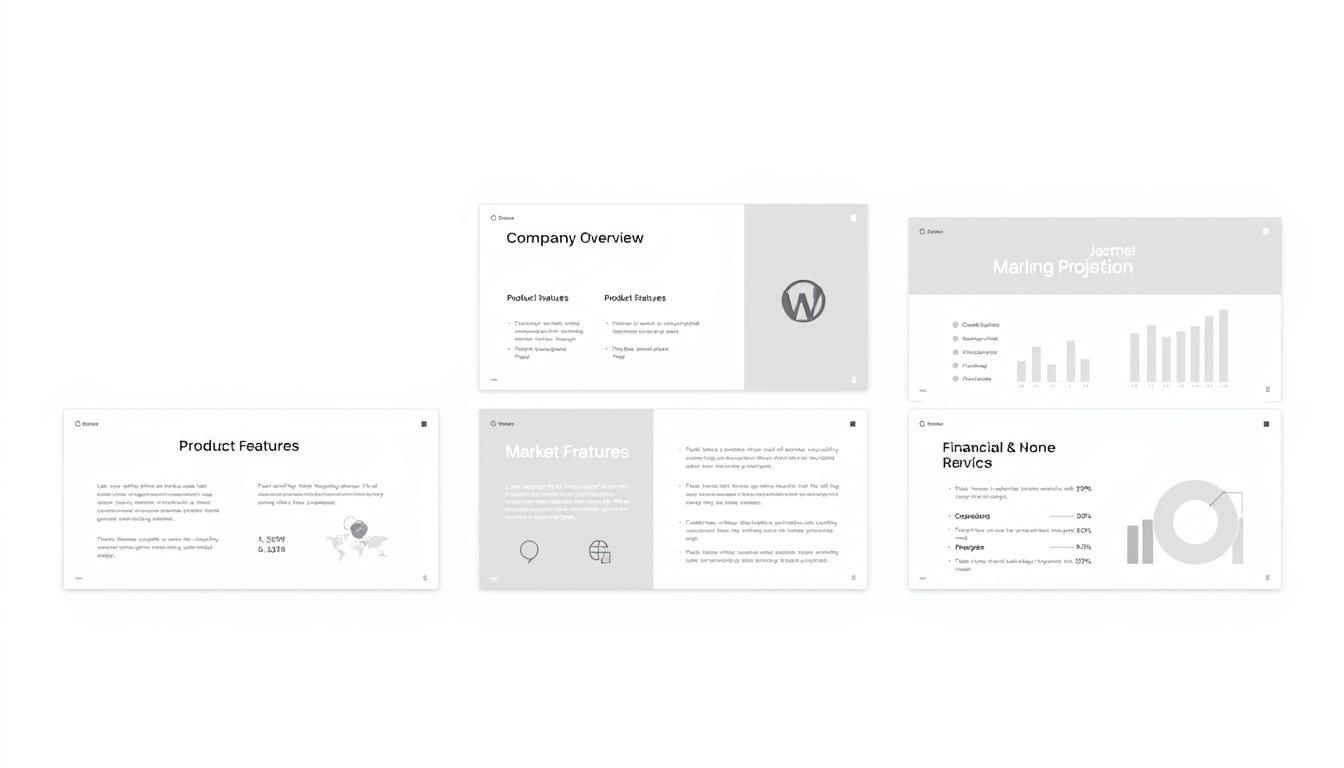
Did you know that a well-crafted pitch deck can make or break a startup’s chances of securing funding? As someone who’s navigated the startup ecosystem, I’ve seen firsthand how a compelling presentation can captivate investors and open doors to new opportunities.
Creating the perfect pitch deck requires a delicate balance of storytelling, data, and design. In this article, I’ll share insights on leveraging pitch deck templates and examples tailored for pre-seed and seed rounds, helping entrepreneurs like you secure the funding you need to grow.
Key Takeaways
- Craft a compelling narrative that showcases your startup’s unique value proposition.
- Use data to demonstrate traction and potential for growth.
- Leverage pitch deck templates to streamline your design process.
- Tailor your pitch deck to your target audience and funding round.
- Practice your presentation to confidently and clearly communicate your vision.
What Is a Startup Pitch Deck and Why It Matters
A startup pitch deck is more than just a presentation; it’s a strategic tool for communicating your vision to investors. As I recall my early days as a startup founder, articulating our vision was a significant challenge.
Definition and Purpose
A pitch deck is a concise and compelling narrative that outlines your startup’s value proposition, market opportunity, and competitive advantage. Its primary purpose is to spark interest among investors, encouraging them to learn more about your business. A well-crafted pitch deck should clearly articulate your startup’s mission, product or service, and growth potential.
The Role of Pitch Decks in Fundraising
In the fundraising process, a pitch deck plays a crucial role in capturing the attention of potential investors. It serves as a visual aid during presentations, helping to convey complex information in an easily digestible format. By effectively communicating your startup’s vision and potential, a pitch deck can be the key to securing the funding you need to drive growth.
Pre-Seed vs. Seed Funding: Understanding the Differences
Navigating the startup funding landscape requires a clear understanding of pre-seed and seed funding stages. As a startup founder, it’s essential to recognize the distinct characteristics of each stage to tailor your pitch deck effectively and attract the right investors.
Key Characteristics of Pre-Seed Rounds
Pre-seed funding is typically about validating your startup idea. At this stage, you’re likely focusing on developing a minimum viable product (MVP) and initial market research. Investors are looking for a compelling vision, a strong team, and early signs of traction. Your pitch deck should highlight:
- The problem you’re solving
- Your unique solution
- Initial market validation
Characteristics of Seed Rounds
Seed funding is about scaling your business. By this stage, you’ve likely validated your product and are looking to grow your customer base and revenue. Investors at this stage are interested in your growth potential, market size, and competitive advantage. Your pitch deck should emphasize:
- User acquisition costs and retention rates
- Revenue growth and projections
- A clear competitive landscape
Understanding these differences is crucial for creating a pitch deck that resonates with investors at each stage. By tailoring your pitch to the specific requirements of pre-seed or seed funding, you can increase your chances of securing the investment you need to grow.
Essential Elements of a Winning Startup Pitch Deck
Crafting a winning startup pitch deck requires a deep understanding of the essential elements that capture investors’ attention. As I’ve seen in my experience, a well-crafted pitch deck can make a significant difference in securing funding for your startup.
Must-Have Slides
Every pitch deck should include certain key slides that provide a comprehensive overview of your startup. These must-have slides are crucial in communicating your vision to potential investors.
Problem and Solution
Clearly articulating the problem you’re solving and your solution is vital. This slide should concisely explain the pain point and how your product or service addresses it. For instance, companies like Airbnb and Uber identified significant problems in their respective markets and created innovative solutions.
Market Opportunity
Demonstrating the market opportunity is essential to show potential for growth. This involves providing data on the size of the market and your potential share of it. A well-researched market analysis can significantly strengthen your pitch.
Business Model
Your business model slide should clearly outline how you plan to generate revenue. This could be through sales, subscriptions, or other means. A clear and viable business model is crucial for investor confidence.
| Slide | Purpose | Key Elements |
|---|---|---|
| Problem and Solution | Identify the problem and your solution | Pain point, solution overview |
| Market Opportunity | Show the potential market size | Market size data, growth potential |
| Business Model | Explain how you will generate revenue | Revenue streams, pricing strategy |
Optional Slides Based on Your Stage
Depending on your startup’s stage, you may need to include additional slides to provide more context or data. For pre-seed startups, focusing on the team, traction, and financial projections can be beneficial. For seed round startups, emphasizing growth metrics and competitive analysis can be more relevant.
As Sequoia Capital notes, “A pitch deck is a crucial tool for entrepreneurs to communicate their vision and strategy to investors.” By including these essential elements and tailoring your pitch deck to your startup’s stage, you can create a compelling narrative that resonates with investors.
Crafting Your Problem Statement Slide
A well-crafted problem statement is the cornerstone of a successful pitch deck, setting the stage for your solution. It’s here that you demonstrate your understanding of the market’s pain points and show investors that you’re tackling a real issue.
Identifying the Right Problem
To craft a compelling problem statement, you first need to identify the right problem. This involves understanding your target audience’s needs, analyzing market trends, and pinpointing the specific pain points your solution addresses. Consider the following key factors:
- Market size and growth potential
- Audience needs and preferences
- Competitor analysis
By focusing on these elements, you can ensure that your problem statement resonates with your audience.
Presenting the Problem Effectively
Once you’ve identified the problem, presenting it effectively is crucial. Use clear, concise language and avoid jargon. Visual aids like charts or graphs can also help illustrate the problem’s significance. For instance, a table highlighting key statistics can be particularly effective:
| Statistic | Value |
|---|---|
| Market Size | $10B |
| Growth Rate | 15% |
| Affected Population | 1M+ |
Developing Your Solution and Value Proposition Slides
Presenting a compelling solution is key to differentiating your startup. As I’ve learned from my entrepreneurial journey, a well-crafted solution slide can make all the difference in capturing investors’ attention.
Clearly articulating your solution is crucial. To do this effectively, focus on the core benefits of your product or service. As Marc Andreessen once said, “The most important thing in a pitch is to clearly articulate the problem you’re solving and the solution you’re offering.”
“The best startups solve real problems for real people.”
Articulating Your Solution Clearly
To articulate your solution clearly, you need to understand your product’s or service’s core benefits. I recommend identifying the unique features that set your solution apart from existing alternatives. Use simple, non-technical language to explain how your solution works and why it’s better.
Creating a Compelling Value Proposition
A compelling value proposition is about quantifying the benefits of your solution. It’s essential to demonstrate how your solution addresses the problem you’ve identified. Use data and statistics to support your claims, making your value proposition more convincing. For instance, “Our AI-powered tool reduces project management time by 30%, increasing productivity and reducing costs.”
By focusing on both articulating your solution clearly and creating a compelling value proposition, you’ll be well on your way to crafting a pitch deck that resonates with investors and helps you stand out in a crowded market.
Building a Strong Team Slide
Your team slide is more than just a list of faces and titles; it’s a chance to tell a story of expertise and dedication. As I’ve learned from my own experiences, a strong team slide is essential for demonstrating your startup’s potential for success.
Highlighting Relevant Experience
When showcasing your team, it’s crucial to highlight relevant experience that aligns with your startup’s mission. This includes key achievements and skills that directly impact your product or service. For instance, if your startup is in the tech space, highlighting team members’ experience with relevant technologies or successful projects can be very persuasive.
Demonstrating Team Cohesion and Expertise
Demonstrating team cohesion is just as important as showcasing individual expertise. Investors want to see a team that works well together, with complementary skills that cover all aspects of the business. You can achieve this by highlighting collaborative projects or shared goals that your team has achieved. As Marc Andreessen once said, “The most important thing for a startup is to have a great team.” A strong team slide can instill confidence in investors by showing them that your startup has the talent and dedication needed to succeed.
Market Analysis: Sizing the Opportunity
Market analysis is a vital element of a pitch deck, as it reveals the potential for growth and scalability. To effectively size the opportunity, you need to understand the Total Addressable Market (TAM), Serviceable Available Market (SAM), and Serviceable Obtainable Market (SOM).
TAM, SAM, and SOM Explained
TAM represents the total potential market for your product or service, while SAM is the segment of TAM that you can realistically target. SOM is the portion of SAM that you can capture within a specific timeframe. Understanding these metrics is crucial for demonstrating your startup’s growth potential.
| Market Metric | Description | Example |
|---|---|---|
| TAM | Total potential market | $100B |
| SAM | Realistic target market | $10B |
| SOM | Obtainable market share | $1B |
Presenting Market Data Convincingly
To present market data convincingly, focus on credible sources and use visual aids like charts and graphs to illustrate your points. For instance, you can use
By clearly articulating your market opportunity and demonstrating a deep understanding of your target market, you’ll be able to show investors that your startup has significant potential for growth.
Traction and Metrics That Impress Investors
To secure funding, your startup needs to show tangible traction and promising metrics. As a founder, I’ve learned that demonstrating progress is crucial for impressing investors and building credibility.
When it comes to your pitch deck, showcasing the right metrics can make all the difference. For pre-seed startups, the focus is on early signs of traction that indicate potential for growth.
Key Performance Indicators for Pre-Seed Startups
At the pre-seed stage, your startup is just beginning to gain momentum. Key performance indicators (KPIs) that matter include:
- User acquisition costs
- Early revenue growth
- Customer retention rates
- Partnerships or collaborations
These metrics demonstrate your startup’s ability to gain traction and lay the groundwork for future growth.
Metrics That Matter for Seed Round Funding
As you move to seed funding, investors expect to see more established metrics that showcase your startup’s potential for scalability. Important metrics include:
- Revenue growth rate
- Customer lifetime value (CLV)
- Customer acquisition cost (CAC) to CLV ratio
- Market share and competitive positioning
By highlighting these metrics in your pitch deck, you’ll be able to demonstrate your startup’s traction and potential for growth, making it more attractive to investors.
In conclusion, showcasing the right traction and metrics is crucial for securing funding. By focusing on the key performance indicators that matter for your stage, you’ll be able to build a compelling pitch deck that impresses investors and helps you achieve your funding goals.
Business Model and Revenue Strategy Slides
In my experience, a clear and compelling business model can make all the difference in a startup’s ability to attract investors. A well-articulated business model not only demonstrates your understanding of your market but also showcases your potential for long-term success.
Explaining Your Business Model
Your business model slide should clearly outline how your startup generates revenue. This involves detailing your revenue streams, cost structures, and key partnerships. For instance, if your startup operates on a subscription-based model, you should explain how the subscription works, the benefits it offers to customers, and how it contributes to your revenue.
Using real-world examples can help make your business model more relatable and understandable. For example, you could compare your business model to that of a well-known company in your industry, highlighting similarities and differences.
Demonstrating Revenue Potential
Demonstrating revenue potential involves providing data-driven insights into your market size, customer acquisition costs, and projected revenue growth. Investors want to see that you have a clear path to profitability. Use metrics such as Customer Lifetime Value (CLV) and Customer Acquisition Cost (CAC) to demonstrate the viability of your business model.
For example, if your CAC is $100 and your CLV is $500, you have a strong indication of a profitable business model. You can further enhance your pitch by including market trends that support your revenue projections.
Startup Pitch Deck Templates for Different Funding Stages
When it comes to creating a pitch deck, using a template can be a great starting point, but it’s crucial to tailor it to your specific funding stage. I’ve seen many startups benefit from using templates designed for their specific needs.
Using a pitch deck template designed for your specific funding stage can help you create a compelling presentation that resonates with investors. In this section, we’ll provide pitch deck templates for pre-seed and seed round funding, along with guidance on how to customize them for your startup.
Pre-Seed Pitch Deck Template
For pre-seed startups, the focus is on showcasing your vision, team, and initial traction. A pre-seed pitch deck template should include slides that highlight your:
- Problem statement and solution
- Market opportunity
- Team and their relevant experience
- Initial traction and milestones
Here’s an example of what a pre-seed pitch deck template could look like:
| Slide | Content |
|---|---|
| 1 | Introduction |
| 2 | Problem Statement |
| 3 | Solution |
| 4 | Market Opportunity |
| 5 | Team |
Seed Round Pitch Deck Template
For seed round startups, the focus is on demonstrating traction, showcasing your product or service, and outlining your growth strategy. A seed round pitch deck template should include slides that highlight your:
- Product or service and its unique value proposition
- Traction and customer acquisition metrics
- Market size and growth potential
- Competitive landscape and your competitive advantage
Here’s an example of what a seed round pitch deck template could look like:
| Slide | Content |
|---|---|
| 1 | Introduction |
| 2 | Product/Service |
| 3 | Traction |
| 4 | Market Size |
| 5 | Competitive Landscape |
Real-World Pitch Deck Examples That Secured Funding
Examining successful pitch deck examples is crucial for understanding what investors look for in pre-seed and seed rounds. By analyzing these examples, you can gain insights into the key elements that make a pitch deck effective.
Notable Pre-Seed Pitch Deck Examples
Several startups have successfully secured pre-seed funding with their pitch decks. For instance, Airbnb and Uber began with simple yet effective pitch decks that highlighted their unique value propositions. These decks focused on the problem, solution, and market opportunity, demonstrating a clear understanding of their target audience.
| Startup | Pre-seed Amount | Key Elements |
|---|---|---|
| Airbnb | $20,000 | Unique marketplace model, user growth stats |
| Uber | $200,000 | Scalable business model, market size potential |
| Dropbox | $1.2M | Simple problem statement, product demo |
Successful Seed Round Pitch Deck Examples
For seed rounds, pitch decks need to demonstrate traction and a clear path to scalability. Facebook and Instagram are examples of startups that successfully secured seed funding. Their pitch decks effectively communicated user growth, revenue models, and market potential.
By studying these pitch deck examples, you can refine your own pitch, focusing on the elements that are most likely to resonate with investors. Whether you’re in the pre-seed or seed stage, a well-crafted pitch deck is crucial for securing the funding you need to grow your startup.
Conclusion: From Pitch Deck to Funding Success
Crafting a compelling pitch deck is a crucial step towards securing funding for your startup. By following the insights and tips provided in this guide, you’ll be well on your way to creating a pitch deck that resonates with investors and helps you achieve funding success.
A well-structured pitch deck not only showcases your vision but also demonstrates your ability to execute it. As you’ve learned, it’s essential to tailor your pitch deck to your funding stage, whether it’s pre-seed or seed round, and to highlight your unique value proposition, market opportunity, and traction.
By leveraging the templates and examples provided, you can create a pitch deck that effectively communicates your startup’s potential and sets you up for funding success. I encourage you to put these principles into practice and watch your pitch deck become a powerful tool in your fundraising journey.